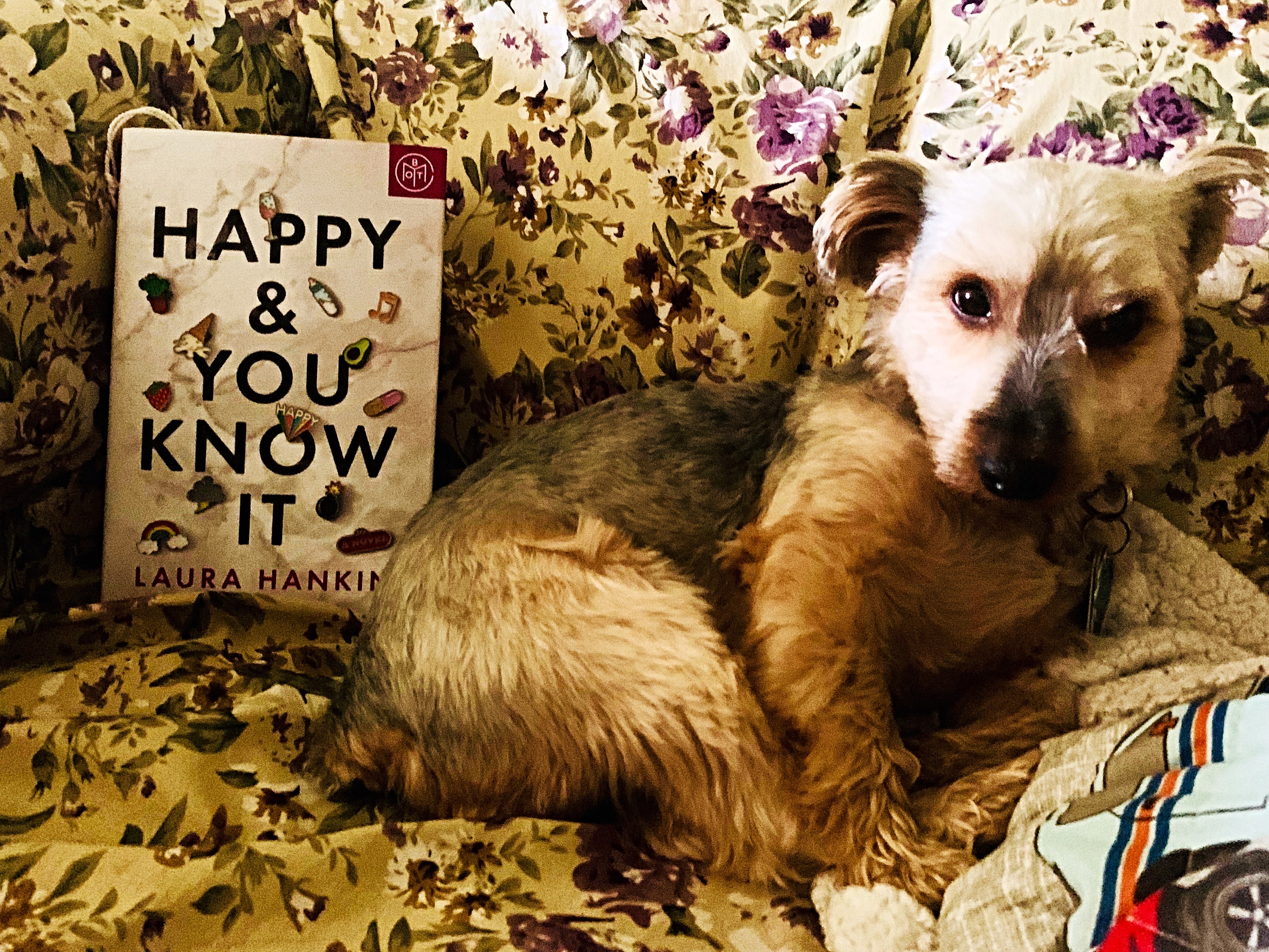
Teddy with the book Happy & You Know It by Laura Hankin
Spoilers below the cut.
A very solid 4 stars. Happy & You Know It by Laura Hankin is a delicious and sometimes shocking novel that I selected as my May Book of the Month. This is one of those books that’s a pure and unadulterated speed read…
Continue reading →
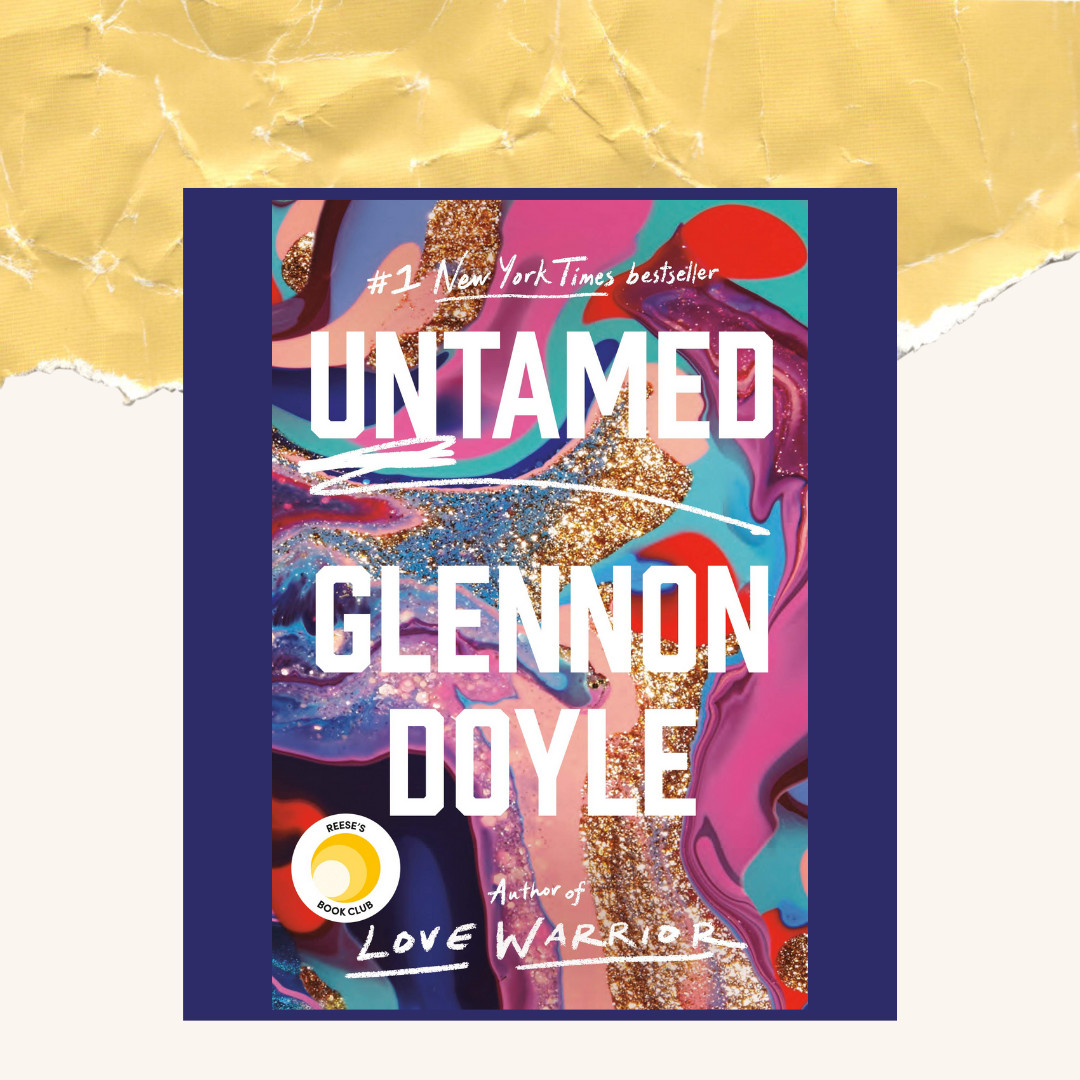
Image: Untamed by Glennon Doyle
2 Stars. Based on the sheer volume of positive reviews that I’ve seen on Goodreads, this is obviously an *~ Unpopular Opinion ~* But I DNF this book @ around 50%.
There are a couple of reasons why I could not finish this text, and I’ll try to be cohesive about what they are.
Continue reading →
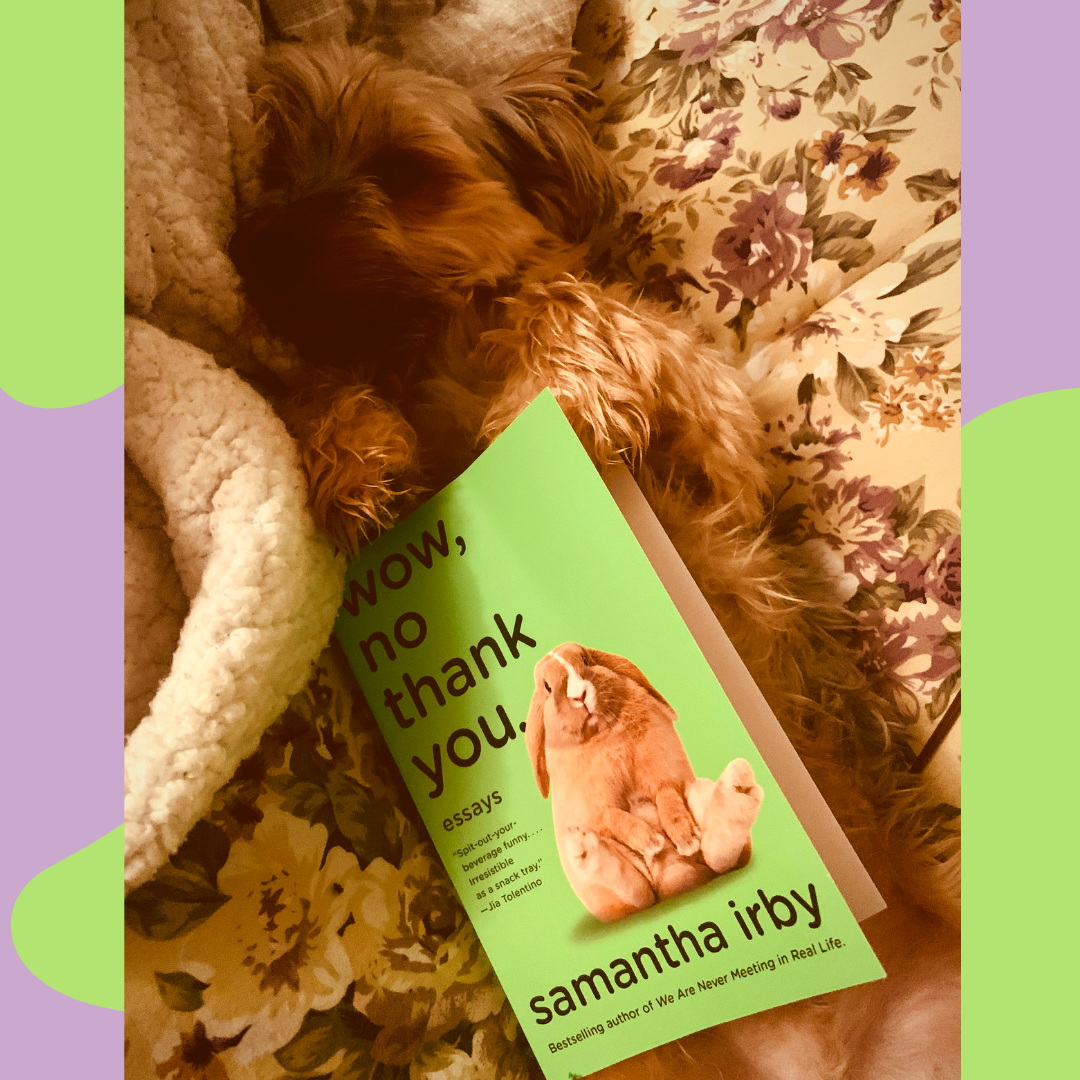
Image Description: A Yorkshire Terrier, Teddy, sleeping with a copy of Samantha Irby’s Essay Collection Wow, No Thank You.
4.5 Stars. Recommended for: Fans of Irby’s previous work, anyone in a reading slump, someone who could use a good belly laugh.
~~~
Quarantine has plopped me firmly in the middle of a reading slump.
At the beginning of 2020, pre-social distancing and when I still had a daily commute that allowed me to tear through books at lightning speed, I was finishing novels nearly once a week. Since mid-March, however, I have barely picked up a book.
While reading for me is typically a source of escapism, this particular situation has been too overwhelming to truly allow me the headspace to pay attention to a narrative. When attempting to read, I would instead find myself distracted by my phone, reading comments from Facebook Physicians (JK) and other apocalyptic news sources. I just couldn’t focus enough to know what was going on in the book. Instead, I’d give up my futile attempt at reading and would turn on mindless YouTube videos that allowed me some reprieve from my own head.
Fast forward to the end of March, when I had the pleasant surprise of receiving my pre-ordered copy of Samantha Irby’s Wow, No Thank You right on time. Long story short- Samantha Irby has helped to cure my Reader’s Block.
Continue reading →
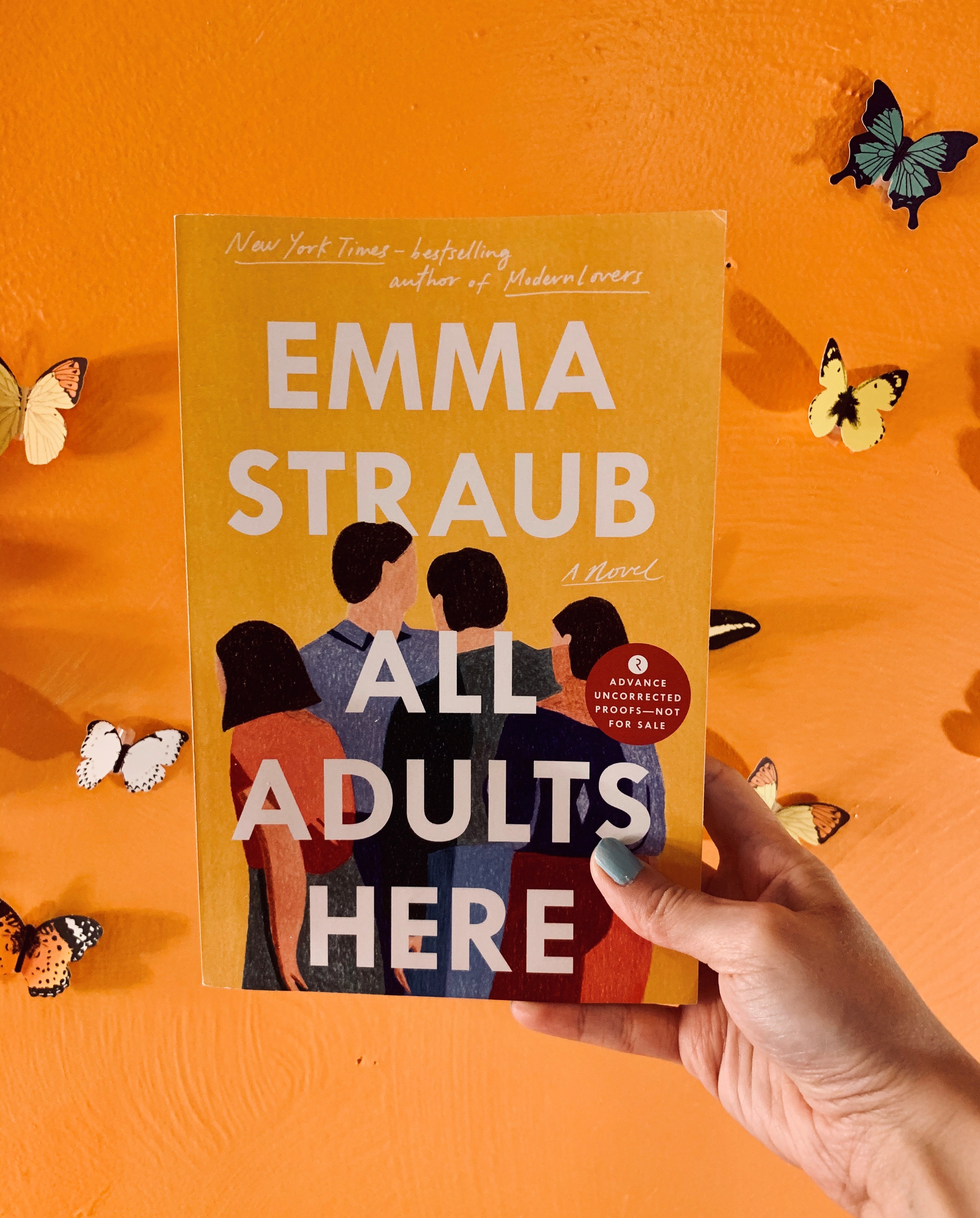
3.5 stars ~ Thanks to Goodreads Giveaways and Riverhead Books for providing an ARC. Recommended for fans of: This is Where I Leave You, Little Fires Everywhere, and Emma Straub’s previous work.
All Adults Here is a multiple perspective novel that presents an introspection on the Strick family as they navigate the fallout of secrets old and new, and difficult choices that shape familial dynamics. One of the key themes, and perhaps the most important, grapples with understanding how the relationships we form with our parents shape us and influence the way we, as adults, create our own families. While the text offers nuanced character development, aspects of the plot’s mechanics and resolution are somewhat dissatisfying.
{Some minor spoilers ahead}
Continue reading →
I plan to begin posting reviews soon (Covid makes writer’s block so much more intense), but before I do, I wanted to give some insight into the scale I’ll be using. Specifically, I’ll be leveraging a 5-star system and each of those stars means something a little different.
As such, I’ve created this nifty little graphic to explain:
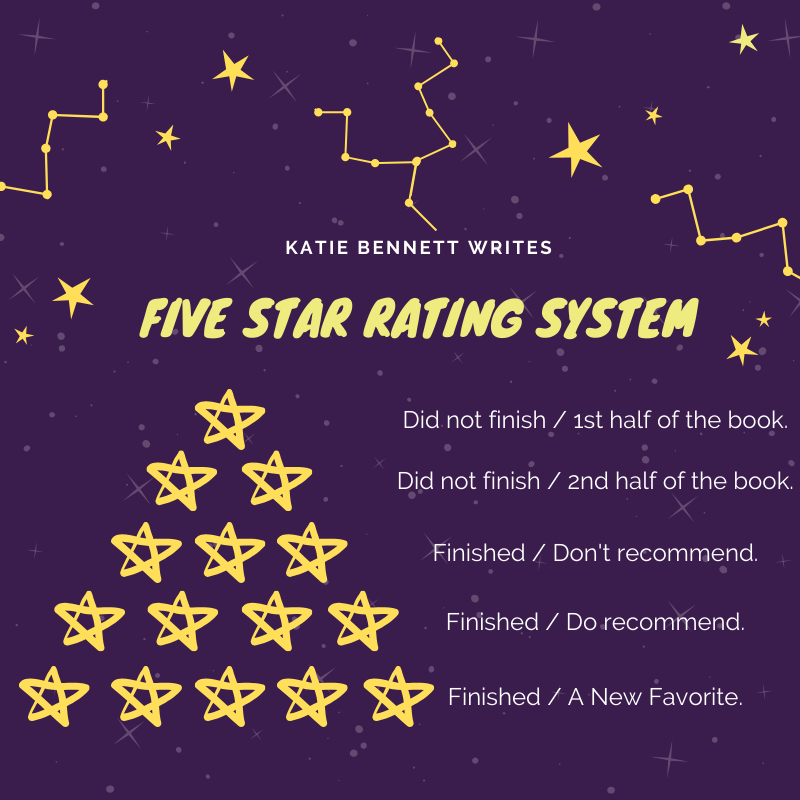
Continue reading →
I remembered this one time that I never told anyone about. The time we were walking. Just the three of us. And I was in the middle. I don’t remember where and I don’t remember when. I don’t even remember the season. I just remember walking between them and feeling for the first time that I belonged somewhere.
So I got home about 15 minutes ago. Where I live, that’s about 2:05 am (EST). I was not drinking. We were not doing anything with a specific purpose in mind, just driving around aimlessly. And then we decided, like we always do, that it was time to go be infinite.
Continue reading →

Source
Happy Thanksgiving, All! I hope that everything is well with you and yours and that you have a wonderful holiday. I am extremely thankful for all the wonderful people and blessings that I have in my life, and, in the style of my blog, I would like to write a little ode to the thing I write about here the most- books.
Continue reading →
The first present is going to be a mix tape. I just know that it should. I already have the songs picked and a theme. It’s called “One Winter.” But I’ve decided not to hand-color the cover…The second side is the one that I like the most. It has winter kind of songs. Here they are:
Asleep by the Smiths
Vapour Trail by Ride
Scarborough Fair by Simon & Garfunkel
A Whiter Shade of Pale by Procol Harum
Time of No Reply by Nick Drake
Dear Prudence by the Beatles
Gypsy by Suzanne Vega
Nights in White Satin by the Moody Blues
Daydream by Smashing Pumpkins
Dusk by Genesis (before Phil Collins was even in the band!)
MLK by U2
Blackbird by the Beatles
Landslide by Fleetwood Mac
And finally…
Asleep by the Smiths (again!)
The Perks of Being a Wallflower
And now, a break from our regularly scheduled literary analysis to talk about this lovely blogger:
Continue reading →

“I’ll Eat Myself If You Can Find a Smarter Hat than Me”
Oh you may not think me pretty,
But don’t judge on what you see,
I’ll eat myself if you can find
A smarter hat than me.
You can keep your bowlers black,
Your top hats sleek and tall,
For I’m the Hogwarts Sorting Hat
And I can cap them all.
There’s nothing hidden in your head
The Sorting Hat can’t see,
So try me on and I will tell you
Where you ought to be.
You might belong in Gryffindor,
Where dwell the brave at heart,
Their daring, nerve, and chivalry
Set Gryffindors apart;
You might belong in Hufflepuff,
Where they are just and loyal,
Those patient Hufflepuffs are true
And unafraid of toil;
Or yet in wise old Ravenclaw,
if you’ve a ready mind,
Where those of wit and learning,
Will always find their kind;
Or perhaps in Slytherin
You’ll make your real friends,
Those cunning folks use any means
To achieve their ends.
So put me on! Don’t be afraid!
And don’t get in a flap!
You’re in safe hands (though I have none)
For I’m a Thinking Cap!
As you can probably tell, I have a lot of Harry Potter feelings. Recently, I discovered someone ranting on a blog (how ironic, I know) about how J.K. Rowling’s Sorting Hat and the houses of Hogwarts reinforce various high-school stereotypes. Gryffindor- The popular kids, the jocks, the it-crowd; Slytherin- The punks, the bad-boys; Ravenclaw- The nerds; and Hufflepuff- the quiet kids. So I’m going to do a little ranting on my blog about how that’s not necessarily true.
Continue reading →
So, I got my letter to Hogwarts today. No really, as if I would still be here at this muggle university if I really had the opportunity to leave and go to a magical school. No, rather, today I got my email letter to sign into Pottermore- the newest creation from the mastermind behind the boy wizard.
Pottermore is an online experience meant to supplement the reading of J.K. Rowling’s seven magical books. As you travel throughout the chapters, you can read information that Jo (as those of us who are fans like to call Ms. Rowling) was going to put into an encyclopedia but decided to make a sort of game out of.
In Pottermore, you take multiple quizzes to find out your wand (Alder, Unicorn Core, 9 and 3/4 inches, unyielding: Short and unyielding, like its owner), as well as your Hogwarts House (for Ravenclaw, the cleverest would always be the best). Once you have been sorted, you go can earn your house points in competition for the house cup.
The real essence of the site, however, is the extra information provided about each chapter of each book. It gives Harry Potter fans a chance to look into Jo’s mind and see why certain things are the way they are. It’s also a way to interact with your friends as you once again discover the magic of Hogwarts.
That brings me to the real reason I’m talking about Harry Potter. Yes, the books and movies were a large part of my childhood. Philosopher’s Stone was published in the UK in 1997, and Sorcerer’s Stone came to the United States in 1998. To put a little perspective on these dates, in October of 1998, I turned 7 years old. In less than three weeks, I will be 20. Because the movie series just ended in July, it is safe to say that I am a proud member of the Potter Generation- 13 years of my life, or 65%, has known what it’s like to be at home at Hogwarts. The thing about the Harry Potter Series, however, is that it has the ability to transcend generations. As the reader grows up, the books and their meaning grow up, too.
Allow me to explain.
As a child, Harry Potter is attractive because of the story. I don’t know any children that wouldn’t want a magic wand that could perform all kinds of spells. The idea is intriguing to the young mind- a place where magic is real, somewhere that could exist in our own world. The books also teach good, moral lessons about the importance of friendship, bravery, and love. Harry is something of a hero- his flaws are not clear and children see him as “The Boy who Lived”- the boy who can do anything. Beyond that, there is wit and humor that Jo provides that actually make children want to keep reading- a feat that is proving more and more difficult as technology displaces literature.
As a teenager, Harry Potter provides a rather realistic view into the pitfalls of adolescent romance. The characters begin to develop as the readers do- in a sense, they are all growing up together. As Harry starts to feel new and different things, his readers are able to relate to his trials and tribulations in a very basic human sense. It’s not so much about the magic anymore as it is seeing bits and pieces of ourselves represented in the different characters.
Finally, as an adult, the importance of the main themes becomes the focal point. The idea of Love always conquering power and hate is poignant. The ability to see the allegorical ethnic-cleansing that Voldemort was trying to implement provides the realization that, though this is a magical world, the issues are the same in real life. Readers begin to see the importance of disregarding ignorance and differences- the main idea becomes that we’re only as strong as we are united in a common goal- the goal of the Greater Good. We also realize that each character does have at least one tragic flaw- whether it be Ron’s Jealousy or Harry’s need to please everyone, the characters become less our heroes and more- ourselves. We see the faults in Dumbledore- how he loved power as much as Voldemort, but chose not to seek it after the death of his sister. We see Snape actually be the hero that he always was- the hopeless romantic who just couldn’t get over the loss of the love of his life, but fought until his dying day to keep her son alive. As adults, there is no more Black and White in Harry Potter- no good or evil, but lots of shades of grey.
And that’s the point- there is no one generation that identifies with Harry Potter the most. No, as readers of all ages grow up and read the books (probably numerous times), something different is unveiled- there is more to understand, something we didn’t see before.
As Harry Potter fans step into Pottermore, there is even more to discover.
For those who wish to Seek it, Hogwarts will always be there to welcome them home.
 Katie Bennett Writes